Background
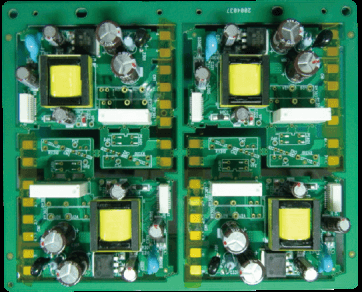
Industrial control PCBAs have the following characteristics:
- Very tight component spacing with high inter-component interference
- Strict product quality requirements
Under traditional manual insertion, 5 operators per shift handled 11 insertion positions with hourly output of about 600 pcs and daily output of 12,000 pcs.
Solution
All odd-form components are automatically inserted by CTW's insertion machines, requiring zero manual supplementary insertion, achieving fully automated production.
Automation Comparison
| Item | Staff/Shift | Insertions | Hourly Output | Hours/Day | Output/Shift (PCS) | Daily Output (PCS) |
|---|---|---|---|---|---|---|
| Manual | 5 | 11 | 600 | 20 | 6,000 | 12,000 |
| Automated | 0.5 | 11 | 720 | 22 | 7,920 | 15,840 |
Key Benefits
- Staff reduction: From 5 to 0.5 per shift, saving 90% labor costs
- Output increase: Daily output from 12,000 to 15,840 pcs, 32% improvement
- Full automation: Zero manual supplementary insertion, all handled by equipment
- Quality traceability: Comprehensive quality inspection and tracing, zero missed insertions or electrical shorts
- Reduced repair costs: Savings on downstream rework and repair expenses
Summary
After automation, quality inspection and traceability improved comprehensively with zero missed insertions or electrical shorts, significantly boosting production efficiency while saving labor costs and downstream repair expenses.